

// CLAIMED VS. EARNED
The opposite of slop was never "human." It's "earned." A note on the year marketing spent solving the wrong problem.
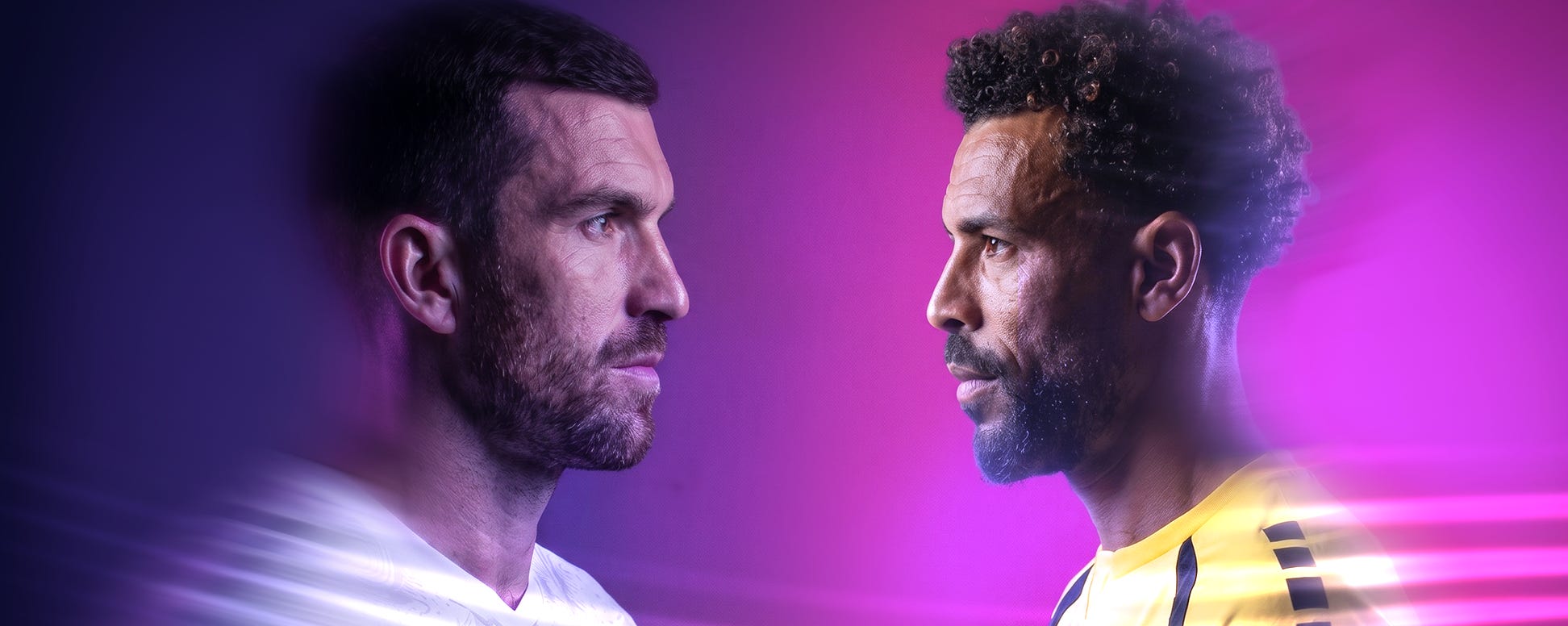
Two footballers went viral on the road to the 2026 World Cup. They are not the same story, and the difference is the whole point.
The first was Tim Payne, a New Zealand defender who, a week before the tournament, had fewer than 5,000 Instagram followers. Then an Argentine creator pointed at him, let’s make the least-known player at the World Cup a legend, and within days Payne had over five million. A community decided, as a kind of game, that he would matter. The wave was real. But it started as a stunt, and stunts are owned by whoever launched them.
The second was Vozinha, Cape Verde’s 40-year-old goalkeeper, on June 15. Spain, the favorites, fired twenty-seven shots at him. He stopped all of them. Cape Verde, playing in its first World Cup, walked away with a 0-0 draw and the first point in its history, and Vozinha walked away as the oldest keeper ever to keep a clean sheet on World Cup debut. His following went from around 50,000 to more than six million within hours, and it’s still climbing. Nobody handed that to him. He did something in front of the world that was undeniable, and the world came looking for him.
Same outcome, millions of followers, overnight. Opposite origin. One was claimed on his behalf. The other was earned in ninety minutes. And only one of them will still mean something in a year.
That distinction is the one the marketing industry has spent 2026 getting wrong.
The wrong axis
Merriam-Webster crowned “slop” the word of the year. Brands are now racing to stamp “100% human” on their work like an organic label. Platforms are building detectors, badges, biometric proofs of authorship. The whole industry has decided the antidote to slop is human, turn off the machine, certify the hand that made it, and you’re safe.
That’s the wrong axis. The opposite of slop was never human versus synthetic. It’s earned versus claimed, the same line that separates Payne from Vozinha.
A glossy, fully human campaign that no community asked for is still slop. It’s just expensive slop. Plenty of forgettable marketing was made entirely by people, focus-grouped, brand-safe, instantly skippable. Stamping “made by humans” on your content is the same move as flooding the feed with AI variations: both try to win trust without earning it. One fakes scale. The other fakes sincerity. A watermark tells you who made something. It tells you nothing about whether anyone should care.
Authenticity was never a property you could assert about yourself. It’s a status other people grant you, and they only grant it for something real.
The tide you build
A World Cup keeper earns his moment in ninety minutes. A brand rarely gets ninety minutes. It has to earn its place the slow way, over the years, which is harder and lasts longer.
Eight years ago, for Panama’s first-ever World Cup, Copa Airlines released a song called “Sube la Marea.” It could have been a jingle, a sponsor’s logo set to music. Instead, it became something the country adopted as its own. Over the years, it stopped being an airline’s ad and turned into a national feeling, the thing that gets a Panamanian out of the chair before they’ve decided to stand.

So when Panama qualified again for 2026, Copa didn’t manufacture a new sentiment. It honored one that already belonged to the people. The remix gathered twenty-nine Panamanian artists across genres and generations, Rubén Blades to Boza, salsa to reggae to típico, and shot the video across the country, from the Canal to the Casco Antiguo to Playa Venao. The brand framed it not as a campaign but as a tribute to the Marea Roja, the red tide of fans. It deliberately stepped out of the spotlight and let the culture be the star, Billboard would go on to name it one of the best songs celebrating the 2026 World Cup. And more tellingly, Panamanians now half-joke that they don’t know if they’ll win a single match, but they’re certain that if the tournament crowned a best anthem, theirs would win.
That’s the difference. Copa didn’t sponsor Panama’s passion from the outside; it became the facilitator of the country’s own anthem. We helped build the original eight years ago, and the lesson held: you don’t claim a feeling, you earn the right to carry it, then you have the discipline to let it stay the people’s, not the brand’s.
The test that cuts through all of it
Cannes will spend this week celebrating “human creativity” and selling brands a watermark. Useful to remember, on the Croisette, that the question was never who made it. It’s this: would anyone defend this if you stopped paying them to?
A fake connection is one-directional: a brand broadcasting a feeling to people, hoping it lands. Earned connection is reciprocal; people carry the brand into rooms it isn’t in, singing it in stadiums, because somewhere along the way, it stopped being a product and became a piece of how they see themselves.
AI will keep getting better at producing things that look real. It will never get better at being worth defending, because that was never about how something was made. It was about whether anyone, anywhere, decided it mattered enough to say so out loud. Or to sing it.
Don’t claim the tide. Earn it.