

// STOP CHASING THE FEED
Building Brands People Feel, Not Just Find
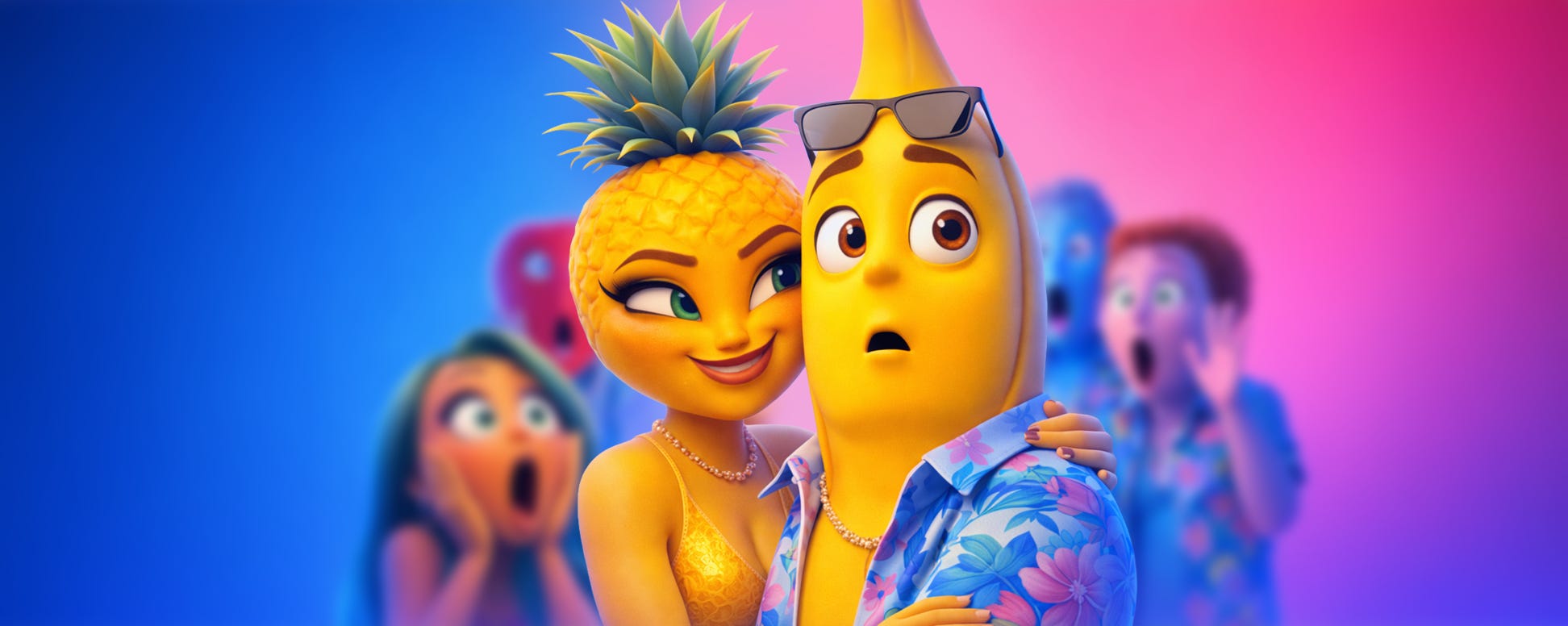
If you’ve been on TikTok lately, you’ve met Watermelina, Bananito, and Cherrita; the anthropomorphic fruit cast of Fruit Love Island, an entirely AI-generated reality series that has racked up over 200 million views in weeks. It’s strangely compelling: perfectly paced drama, vertical-native edits, an algorithmic dream of engagement.
But here’s the catch: for all its views, there’s not a single real feeling on screen. It’s a mirror of what happens when the goal is reach and nothing else.
And yet, brands are tempted to jump in. Ad Age’s Gillian Follett put it plainly: People are much less forgiving of companies than they are of random creators just having fun with AI. Jumping on the trend too quickly can backfire, leading to real consumer backlash instead of the sense of connection brands are actually trying to build. That tension is exactly what Above the Algo was built for.
When “optimized” still feels empty
Scroll long enough and every brand starts to look the same: same formats, same hooks, same rented flashes of attention. The feed may be efficient, but it rarely feels human.
We don’t treat algorithms as villains; we treat them as starting points. They’re brilliant at showing us what people do and where they cluster. But the questions that grow a brand sit underneath the graphs: Why did this resonate here, now? What feeling did it unlock? Does it move someone closer to seeing your brand as part of their story, not just their scroll?
Fruit Love Island is proof that AI can crack the format. It can mimic the pacing of Love Island, generate daily episodes, and get tens of millions of views. What it can’t do is manufacture genuine connection, and audiences feel that difference, even when they can’t name it. “Some viewers admit they hate to love it,” one analysis noted, “drawn in by the bizarre fruits while also recognizing its lack of substance.”
Above the Algo starts where that lack of substance ends, using the feed as a listening device, not a finish line.
AI for signal, humans for meaning
Our stance is simple: AI and automation should supercharge strategy, not strip it of humanity. AI helps us read behavior at scale: patterns, clusters, language, creative performance. Humans decide what to do with that: which tensions to lean into, which stories to tell, which communities to approach with care, and which trends to deliberately sit out.
That last point matters. Ad Age’s analysis of Fruit Love Island lands on a key lesson for brands: entertainment should be the focus of your content, but not every trend needs your logo on it. Knowing when not to participate is as strategically important as knowing when to spark. The brands that win aren’t the fastest to jump on the villa, they’re the ones clear enough on their emotional territory that they know instinctively what fits and what doesn’t.
Above the Algo is our way of making sure the work serves both the system and the soul. Practically, it means:
We optimize for emotional traction, not just clicks. We track how strongly people feel understood, inspired, or “seen” by the brand, and how that ties to repeat behavior and loyalty.
We design for communities, not generic personas. We find real groups with real rituals, and build work that feels native to how they talk, gather, and share.
We keep a dual scorecard. Revenue, lift, and retention on one side; emotional connection, cultural relevance, and community health on the other. Both have to move, or the work’s not done.
The outcome we’re after: brands that are system-smart enough to show up in the right feeds and human enough to be remembered when the feed moves on.
Why it matters now
Most brands have figured out how to get seen. Fewer have figured out how to be missed if they disappeared tomorrow.
The internet doesn’t need another brand behaving like Fruit Love Island, endlessly engineered for views, strangely watchable, but emotionally disposable. Above the Algo is our line in the sand. Use AI to understand the villa: who’s coupling up with what, which storylines pull people in, where attention likes to wander. Then let humans decide what’s worth feeling, and build work that could never be mistaken for a parody of connection.
Algorithms can give you an island full of talking fruit. We’d rather help you build a brand people would actually miss when they put the phone down.